
Get Your Quote for Biometric Access Control Installation
Fill the form below to inquire about Electrical Services Ontario's Biometric Access Control Installation in Arva.
Call Electrical Services Ontario at (289) 672-2825 for Biometric Access Control Installation in Arva and end shared credentials.
Fill the form below to inquire about Electrical Services Ontario's Biometric Access Control Installation in Arva.
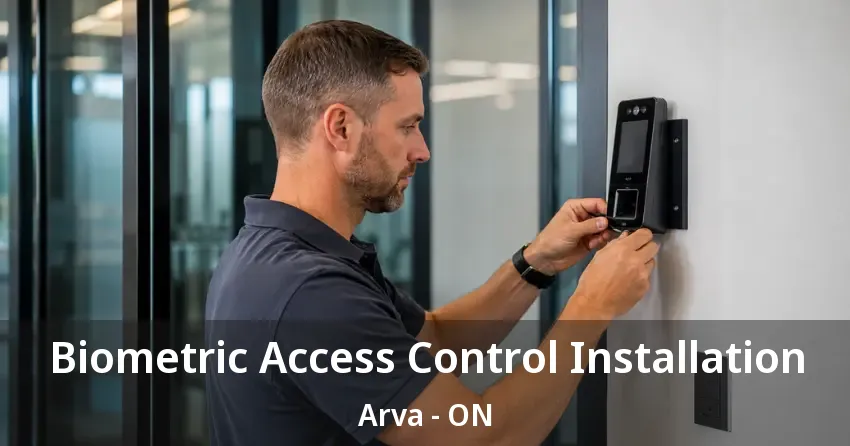
A fingerprint cannot be lost, shared, or duplicated the way a card or fob can. Biometric Access Control Installation Arva brings that level of certainty to the doors that genuinely need it.
Not every door in a building needs biometric security, but the ones protecting a server room, a pharmacy dispensary, or an executive floor often do. What separates a properly installed biometric system from a disappointing one usually comes down to who did the installation: whether the technician understood enrollment accuracy, sensor placement, network security, and the consent requirements that come with handling anyone's physiological data. Electrical Services Ontario brings that specific combination of technical and compliance knowledge to every Biometric Access Control Installation Arva project we take on, treating the privacy side of the work as seriously as the hardware itself.
A qualified biometric installer understands sensor technology, enrollment procedures, and the privacy obligations that come with collecting fingerprints or facial data, not just how to mount a reader and run a cable. Electrical Services Ontario approaches every Biometric Access Control Installation Arva as both a technical project and a compliance project from the first site visit, since getting either half wrong produces a system that either does not work reliably or exposes the business to privacy risk. Many installers in the broader access control market have never handled a biometric project specifically, which shows up quickly in how they talk about consent and data handling, or more often, how they avoid the topic entirely.
Technicians handling biometric work throughout Arva also need to understand fallback authentication, since no biometric sensor achieves perfect accuracy on every attempt. A properly installed system always includes a secondary method, a PIN or card, for situations where a fingerprint reads poorly due to a cut, dirt, or a sensor that needs cleaning. Skipping this step is one of the fastest ways to turn a promising security upgrade into a daily source of employee frustration.
Installation starts with a site assessment identifying which doors genuinely need biometric-level security versus which can use a lower authentication tier, since biometric hardware costs meaningfully more than card readers and applying it everywhere wastes budget without adding proportional security. Our technicians map out server rooms, records storage, pharmaceutical areas, and other genuinely sensitive spaces throughout Arva before recommending where biometric readers actually belong, rather than defaulting to biometric everywhere simply because it sounds more secure on paper.
Biometric Access Control Installation typically ranges from $2,500 to $8,000 per door in the area, depending on whether the system uses fingerprint or facial recognition, single or multi-factor authentication, and how many doors require biometric-level security. Call Electrical Services Ontario for a quote specific to your facility.
A properly installed system always includes a fallback authentication method, such as a PIN or card, for situations where a fingerprint reads poorly due to a cut, dirt, or a sensor that needs cleaning. No biometric sensor achieves perfect accuracy on every attempt, so a fallback is a required part of any reliable installation.
Fingerprint scanners are more cost-effective and work well for staff-only areas with a stable user base. Facial recognition costs more but authenticates without physical contact, which suits environments prioritizing touchless access or higher throughput at a busy entrance.
Yes. Biometric data collection generally requires meaningful consent from anyone being enrolled, since fingerprints and facial data are treated as sensitive personal information under federal privacy law. Organizations need to notify employees what data is collected, how it is stored, and what happens to it if someone leaves.
Biometric systems store templates, a mathematical representation of a fingerprint or face rather than a raw image, and these templates require encrypted storage and transmission along with network segmentation separate from general office traffic. A vendor without a clear answer on encryption and storage should raise concern regardless of pricing.
Multi-factor authentication, combining a biometric read with a card or PIN, fits high-security environments like data centers or research labs where a single-factor failure is not acceptable. Most staff-only areas are adequately secured with a single biometric factor.
Installation timelines depend on the number of doors and whether consent documentation and staff enrollment are included, but most single-door or small-facility projects take 1 to 2 weeks from assessment through full enrollment.
A properly installed biometric system typically performs reliably for 7 to 10 years before major hardware needs replacement, assuming sensors are kept clean and firmware receives regular updates.
Sensor placement and mounting height matter more with biometric hardware than with card readers, since a fingerprint scanner mounted too high or at the wrong angle produces frustrating read failures that erode user confidence in the whole system. We test placement with actual users during installation across Arva rather than mounting to a generic spec sheet and hoping it works for the people who will use it every day, adjusting height and angle based on real feedback before the project is considered complete.
Fingerprint scanners remain the most cost-effective biometric option, reading a finger pressed or swiped against a sensor in under a second under normal conditions. They work well for staff-only areas with a stable, known user base and hold up reliably in most indoor commercial environments across Arva. Enrollment accuracy typically takes only a few minutes per person, which matters for organizations onboarding new staff regularly.
Facial recognition systems authenticate without any physical contact, which appeals to environments prioritizing touchless access or higher throughput at a busy entrance. Facial systems generally cost more than fingerprint readers and require more careful placement relative to lighting conditions, since poor lighting or extreme backlighting can degrade recognition accuracy. Buildings across Arva with large glass entrances or significant natural light swings throughout the day need extra attention during placement to avoid recurring read failures.
Combining a biometric read with a card or PIN creates a genuinely harder system to defeat, since an attacker would need both a valid credential and a match to someone's physical traits. This layered approach fits high-security environments like data centers or research labs where a single-factor failure is not acceptable, and the extra step at the door is a reasonable tradeoff given what is being protected. Most Biometric Access Control Installation Arva projects in this category also log every access attempt for audit purposes, which matters when compliance requirements call for a documented trail of who accessed what and when. Financial institutions and healthcare facilities are the most frequent adopters of this layered approach, since regulatory scrutiny in those industries tends to be higher than average.
A single biometric factor works fine for most staff-only areas where the goal is simply confirming the right person is genuinely present, not defending against a determined, resourced attacker. Adding a second factor everywhere increases cost and friction without a proportional security gain in lower-risk areas, which is why we recommend matching authentication complexity to actual risk rather than applying the strictest option universally across every door in the building. A general office area rarely needs the same authentication burden as a server room down the hall. Treating every door identically is a common, avoidable overspend we help clients steer clear of during the initial planning stage, well before any expensive hardware has already been ordered and physically installed on-site.
Biometric Access Control Installation Arva generally requires meaningful consent from anyone being enrolled, since fingerprints and facial data are treated as sensitive personal information under federal privacy law. Organizations need to notify employees or visitors what data is collected, how it is stored, and what happens to it if someone leaves the organization or requests removal. This applies even in the workplace throughout Arva, since employees cannot simply waive their privacy rights as a condition of employment, and an employer that presents consent as mandatory rather than genuine is on shaky legal ground.
We help clients across Arva build this notice and consent process into the rollout rather than treating it as an afterthought once hardware is already installed. A biometric system deployed without proper consent documentation creates legal exposure regardless of how well the hardware itself performs. Retrofitting consent after the fact is far more disruptive than building it in from the start, since it often means re-enrolling every user under a proper process months after the original rollout.
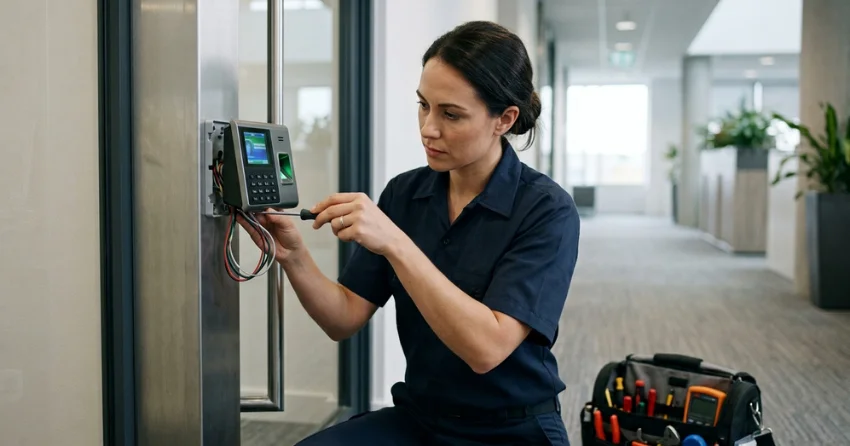
Biometric templates, the mathematical representation of a fingerprint or face rather than a raw image, still require careful network security since a breach exposing this data cannot be remedied the way a compromised password can. Our technicians configure biometric controllers on segmented network zones separate from general office traffic, reducing the exposure if another part of the network is compromised. This segmentation throughout Arva is a standard part of every Biometric Access Control Installation project we deliver, not a premium add-on reserved for larger budgets.
Encrypted storage and transmission of biometric templates is a baseline requirement we build into every installation, not an optional upgrade. A vendor offering biometric hardware without a clear answer on how templates are encrypted and stored is a vendor to be cautious of across Arva, regardless of how competitive their pricing looks. This detail rarely gets asked about during a sales conversation, which is exactly why it deserves attention before signing a contract.
A qualified provider should explain their fallback authentication approach, their template storage and encryption method, and their process for building compliant consent documentation before a single sensor goes on the wall. If a provider cannot answer these questions clearly, that is a signal the installation may focus on hardware alone without the compliance layer that Biometric Access Control Installation Arva specifically requires. Asking these questions upfront, before signing anything, saves significant cost and disruption compared to discovering the gap after enrollment is already underway.
Property owners evaluating providers should treat these as standard questions, not advanced or unusual ones. Any qualified biometric installer throughout Arva should have clear, confident answers ready without needing to check with someone else first, and hesitation on these specific points is worth taking seriously before signing anything or committing to a specific vendor.
The most common failure is treating biometric hardware exactly like a card reader installation, mounting the sensor and wiring it without addressing consent, template security, or fallback authentication at all. This produces a system that technically unlocks the door but leaves the organization exposed on the compliance side and frustrated on the usability side when sensors fail to read reliably throughout Arva. We see this most often when a general access control installer takes on a biometric project without prior experience specifically in this category of work.
A second common mistake is skipping the fallback authentication method entirely, leaving employees locked out any time a sensor misreads a fingerprint due to a bandage, dirt, or normal aging of the skin. A well-executed Biometric Access Control Installation Arva always builds a secondary method into the design from the start, since even the best biometric sensors have an off day and staff need a reliable way in regardless of what happened to their hands that morning.
Biometric Access Control Installation Arva typically ranges from $2,500 to $8,000 per door in the area, depending on whether the system uses fingerprint or facial recognition, single or multi-factor authentication, and how many doors require biometric-level security. A single restricted-area fingerprint reader sits toward the lower end, while a multi-door facial recognition deployment with network segmentation sits higher. Call (289) 672-2825 or contact us for a quote specific to your facility, and expect a clear breakdown of what's driving the cost for your specific configuration.
A properly installed biometric system across Arva typically performs reliably for 7 to 10 years before major hardware needs replacement, assuming sensors are kept clean and firmware receives regular updates. That lifespan, combined with the security a biometric layer adds to genuinely sensitive areas, is what makes the higher upfront cost worthwhile for the specific doors that need it, rather than a blanket upgrade applied without regard to actual risk.
Electrical Services Ontario is fully licensed and insured, and every biometric access control installation across Arva is backed by a workmanship warranty on the hardware and configuration delivered. With 15 years of experience across access control systems generally and biometric hardware specifically, our technicians treat the compliance side of this work with the same seriousness as the wiring itself, since a system that ignores either half is not actually finished. We have handled installations ranging from a single restricted server room to full-building deployments spanning dozens of doors.
That dual focus is why businesses handling genuinely sensitive data or spaces throughout Arva choose our team over installers who only address the hardware half of the job. Getting biometric security right means the technology works and the organization stays protected from the privacy exposure that comes with handling this specific kind of data, which is a distinction that matters more with biometrics than with any other credential type.
Electrical Services Ontario handles the full scope for facilities across Arva, from the initial assessment of which doors genuinely need biometric security through consent documentation, installation, and staff enrollment. Every enrolled user leaves the process understanding what data was collected and why, which is a step too many providers skip entirely. A biometric system installed without that clarity is a liability waiting to surface, no matter how well the hardware itself performs day to day. That combination of working hardware and clean compliance is what a genuine biometric installation actually looks like, and it is the standard every project is held to regardless of size. Call (289) 672-2825 or contact us to schedule a site visit and start with an honest assessment of where biometric access actually belongs in your building.
Every service call starts with a unique situation. Here are the common issues customers contact us about and how our team handles them.

Tell us what is happening — no power, a breaker that will not reset, or a planned upgrade. We talk it through and book a time that works for you, including same-day for urgent calls.
A licensed electrician looks at the actual panel, circuit, and load rather than quoting over the phone, then gives you a firm written price with the scope set out line by line.
The electrician who quoted the job does the work. Drop sheets go down, permits are filed where the work calls for it, and you get an update before anything changes from the plan.
Every circuit is tested before we close the panel, the inspection is booked and the certificate handed over, and our labour is warrantied for two years.
Reach out to Electrical Services Ontario for panel upgrades, rewiring, EV chargers, generators, or emergency electrical repairs across Arva.
Call, or send a message through the form below, either way an electrician gets back to you rather than a call centre.
CALL US (289) 672-2825 EMAIL US Click to send a messageYour message stays between us.

