

Get Your Quote for Ethernet Cabling Installation
Fill the form below to inquire about Electrical Services Ontario's Ethernet Cabling Installation in Ontario.
Call Electrical Services Ontario at (289) 672-2825 for Ethernet Cabling Installation in Ontario and get a link that holds.
Fill the form below to inquire about Electrical Services Ontario's Ethernet Cabling Installation in Ontario.
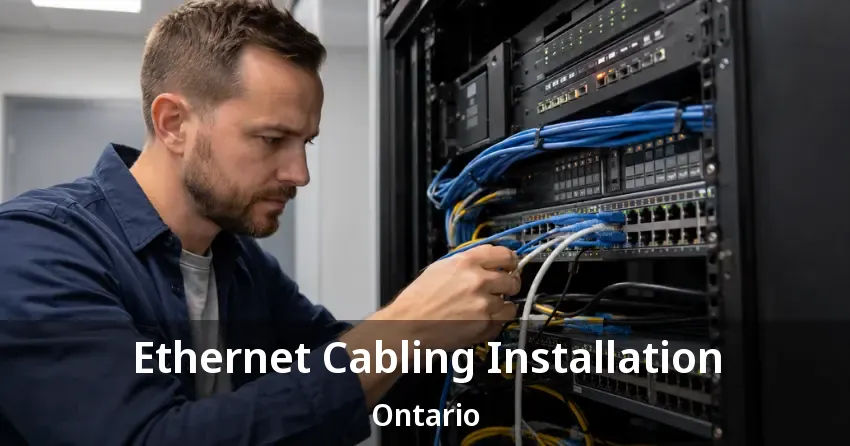
Ethernet Cabling Installation Ontario gives every room a dedicated, wired connection that Wi-Fi alone can never fully replace. Concrete, distance, and interference make the promise of fast Wi-Fi everywhere hard to keep.
A wired connection carries a full, dedicated signal from the router straight to the device, with no walls, no interference from neighboring networks, and no competing for bandwidth with every other device in the building. Electrical Services Ontario plans and installs structured Ethernet cabling for homes and small offices across Ontario, so streaming, gaming, and video calls run on infrastructure built for them rather than a wireless signal doing its best through drywall. The difference is immediately noticeable to anyone who has spent years assuming spotty Wi-Fi was simply how the internet worked in certain rooms.
A complete installation runs cable from a central point, typically where the modem and router sit, out to wall jacks in every room that needs a wired connection near Ontario. The work includes cable selection, pathway planning through walls and ceilings, termination at both ends, and a signal test on every run before the job is considered finished. A properly scoped project accounts for the rooms that need connections today and the ones likely to need one in the next few years, since retrofitting a single missed room later almost always costs more than including it in the original plan from day one.
Most homeowners underestimate how many rooms actually benefit from a wired drop until the layout gets mapped out room by room for homes in Ontario. A home office, a living room with a smart TV and streaming devices, and a bedroom with a gaming console are the three most common requests. Running all three in a single visit is almost always more efficient than adding them one at a time over several years of piecemeal upgrades. Bundling the work also means only one round of scheduling, one visit, and one disruption instead of three separate ones spread out over time.
Our team starts with a walkthrough to identify where the modem and router live, count the rooms that need a connection, and check for pathway obstacles like finished ceilings, concrete walls, or fire-rated construction near Ontario. From there we map out a cable route before a single run gets pulled, since discovering a blocked pathway mid-job costs more time than planning around it from the start. That upfront planning is what keeps a project moving smoothly from the very first cable pull all the way to the final signal test.
Typical costs for Ethernet Cabling Installation in the area range from $1,500 to $8,000 depending on drop count, cable category, and how accessible the pathways are throughout the property. A standard home project with three to six drops and reasonable access sits toward the lower end. Contact Electrical Services Ontario for a quote specific to your space.
Most homes benefit from three to six drops covering a home office, a living room entertainment center, and one or two bedrooms, depending on how many people work or game from home. Planning around actual usage keeps the project both effective and reasonably priced.
Cat6 is the practical, cost-effective choice for the vast majority of residential and small office installations, since nearly every home falls comfortably within the run length where it performs at full rated speed. Cat6a is worth the extra cost for a home office with heavy file transfers or a media server.
A typical home project with three to six drops takes one day in most cases, assuming reasonable ceiling or wall access. A larger project or a home with difficult concrete construction can extend to two days.
In most cases, yes. Cable can be fished through wall cavities using existing pathways, and a small access point is only needed occasionally, patched to a paint-ready finish before the technician leaves.
Often, yes. Plaster walls and unpredictable stud spacing require more careful fishing than a newer build with standard construction, which can add time to the schedule. An initial walkthrough determines the actual timeline for the specific house.
Yes. Every run gets tested for signal integrity before the job is considered complete, so a homeowner never discovers a bad connection after the fact. This final test takes only a few minutes but catches termination issues before they become a mystery weeks later.
The standard choice for most residential and small office installations is Cat6 cabling, which supports gigabit speeds reliably at the run lengths typical inside a home or single-floor office throughout Ontario. Once cable is pulled and terminated at a wall jack on one end and a patch panel or router on the other, every run gets tested for signal integrity before we call the job complete. That means a homeowner never discovers a bad connection after the fact. That final test takes only a few minutes but catches any termination issue before it becomes a mystery weeks later, long after the crew has left the property.
Cat6 handles gigabit speeds reliably and 10-gigabit performance over shorter distances, making it the practical, cost-effective choice for the vast majority of residential and small office installations for homes in Ontario. Nearly every home or single-floor office falls comfortably within the run length where Cat6 performs at its full rated speed, which is why it genuinely remains the default recommendation for most projects we quote and install.
Cat6a becomes worth the extra cost for businesses across Ontario specifically for a home office running heavy file transfers, a media server, or a small business planning to add more bandwidth-heavy equipment over the next several years of growth. The price difference per run is modest enough that some homeowners choose it anyway as a future-proofing step, even when Cat6 would technically cover their current needs. A straightforward recommendation based on actual usage beats defaulting to whichever category costs more.
Fiber becomes relevant for any run that exceeds the distance copper cable can reliably carry, which matters most in larger properties or installations connecting separate buildings on the same lot. A detached garage office or a workshop some distance from the main house is a common case where fiber makes more sense than trying to stretch copper past its practical limit. It also resists electromagnetic interference in a way copper cannot, which matters for runs near heavy electrical equipment or industrial machinery. Most residential projects never actually need it, but it is worth knowing when the distance genuinely calls for it, since forcing copper past its rated distance produces a connection that works unreliably rather than failing cleanly.
The right category for homes across Ontario depends on what actually runs through the connection rather than a generic upgrade-everything approach. A household streaming in 4K and working from home comfortably fits on Cat6, while a household running a home server or frequent large file transfers benefits from the extra headroom Cat6a provides. We walk through actual usage during the assessment so nobody pays extra for capacity they will never use, and the recommendation reflects the household's real habits rather than a sales pitch toward the pricier option. That honest, straightforward approach is part of why repeat customers keep calling us back for every subsequent project they take on around the house, from the first Ethernet run to whatever comes after it.
Ceiling and wall construction are the two biggest factors in how quickly a cabling job moves. An unfinished basement or attic with easy access lets cable runs go in fast. A finished home with no accessible pathway often requires fishing cable through tight wall cavities or, occasionally, a small access point that gets patched to a paint-ready finish before the technician leaves. Knowing which situation genuinely applies before the work starts is what makes the difference between an accurate quote and a surprise change order once the walls are already open. This is exactly why a phone estimate alone can never replace an in-person walkthrough of the specific space and its construction, room by room and wall by wall throughout the property.
Open ceiling access in a basement or attic speeds up every run significantly for homes near Ontario, while finished walls require careful fishing to avoid unnecessary drywall cuts and preserve the finished look of the room. Concrete or masonry construction may need surface raceway where conduit does not exist, which adds both time and cost to a project depending on how much surface work is genuinely needed. Fire-rated assemblies also require proper firestopping at every penetration, which is a code requirement that gets skipped by anyone not working to proper electrical standards or licensing requirements. That single detail is exactly what genuinely separates a properly licensed installer from one cutting real corners that will not surface until much later on.
Existing conduit from a previous phone or cable installation can often be reused for homes across Ontario, cutting both time and cost significantly compared to fishing an entirely new pathway from scratch. An open basement ceiling with exposed joists is the fastest scenario of all, since cable can be run and secured without any fishing whatsoever. Knowing which of these advantages apply to a specific home before quoting is what keeps an estimate accurate instead of padded for uncertainty that never actually materializes on the day of the visit itself, once the crew is finally standing in the room.
Recognizing which of these apply to a specific home or office before work begins is what separates an accurate estimate from a project that runs into unexpected delays partway through the schedule.
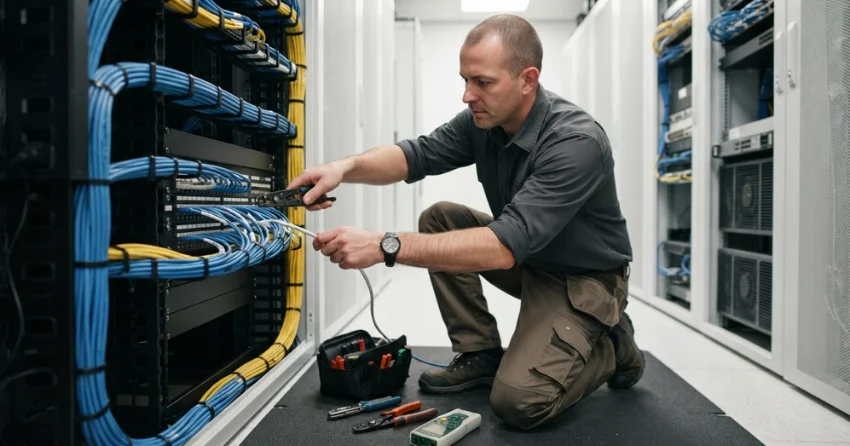
Most homes benefit from three to six drops covering a home office, a living room entertainment center, and one or two bedrooms, depending on how many people work or game from home on a regular basis. A small office typically needs one drop per desk plus additional drops for shared printers, conference room equipment, and any wireless access points being added to extend coverage throughout Ontario. Mapping this out during the walkthrough avoids both underbuilding and paying for drops that will sit unused for years without ever being connected to anything or serving any real purpose beyond adding to the initial bill. A quick room-by-room count during the assessment settles this question far more reliably than guessing over the phone ever could.
Planning drop count around actual usage rather than a flat number per room keeps the project both effective and reasonably priced for households across Ontario. A guest bedroom that sees only occasional use rarely needs the same priority as a home office used daily for video calls. The walkthrough is genuinely where that distinction actually gets made before any material gets ordered or a single cable gets pulled through the wall. This household-by-household approach is exactly why the final drop count often differs meaningfully from what a generic online calculator would suggest for a home of similar size. Two neighboring homes with genuinely identical floor plans can easily end up with very different final drop counts once actual usage is genuinely factored in.
A small office genuinely benefits from thinking beyond just desks for a complete Ethernet Cabling Installation Ontario, since conference rooms, shared printers, and wireless access points all need their own dedicated connection to perform reliably throughout the workday. Planning for headcount growth over the next few years genuinely avoids a second disruptive visit just to add a handful of additional drops down the line once the team has already expanded well past its original footprint. That forward planning step is a small cost upfront compared to the real disruption of a follow-up project later, once walls and finishes are already back in place. A business that grows even modestly rarely ever regrets having planned for a few extra drops from the very beginning stages of the project.
A typical home project with three to six drops takes one day in most cases for homes in Ontario, assuming reasonable ceiling or wall access and no major pathway obstacles. A larger project, a small office with a dozen or more drops, or a home with difficult concrete construction can extend to two days depending on how much fishing the walls actually require throughout the property. Most homeowners are pleasantly surprised how contained the disruption stays for a project of this size.
Older homes near Ontario sometimes add time to the schedule, since plaster walls and unpredictable stud spacing require more careful fishing than a newer build with standard construction. We assess this during the initial walkthrough so the quoted timeline reflects the actual house rather than a generic estimate that assumes every wall behaves the same way regardless of when it was actually built.
Electrical Services Ontario is fully licensed and insured, and every Ethernet Cabling Installation Ontario project is backed by a workmanship guarantee on the finished cabling and any patching involved. Our technicians bring 15 years of experience running low-voltage cabling in homes and offices of every age and construction type. That experience is how they plan a job that actually holds up rather than needing a follow-up visit within the year to fix something rushed the first time around.
We test every single run before calling a project complete, and we document drop locations across Ontario so a homeowner or future technician always knows exactly what connects where. That documentation becomes genuinely useful the first time something needs troubleshooting years down the line, long after the details of the original install have been forgotten by everyone involved.
Several patterns point toward a home or office where Wi-Fi alone has stopped being enough. Recognizing them early usually means a smaller, less disruptive project than waiting until the frustration becomes constant and affects everyone using the space daily.
Any single sign is worth a call for Ethernet Cabling Installation Ontario, especially in a household with more than one person working or gaming at the same time on separate devices every single day. A home or office showing two or more usually has genuinely outgrown what Wi-Fi alone can reliably support.
Typical costs for Ethernet Cabling Installation in Ontario range from $1,500 to $8,000 depending on drop count, cable category, and how accessible the pathways are throughout the property. A standard home project with three to six drops and reasonable access sits toward the lower end, while a larger office project or a home with difficult concrete pathways sits higher. Simply contact us or call (289) 672-2825 to get a quote specific to your space and its exact layout, room by room.
Every quote for Ethernet Cabling Installation Ontario reflects an in-person walkthrough rather than a phone estimate, since pathway access affects the final price more than almost any other factor involved in the job. We provide a clear scope before any material gets ordered, so the project stays on budget from start to finish, without surprise line items appearing once the work is already underway.
Electrical Services Ontario has wired homes with concrete floors, century-old plaster walls, and everything in between throughout Ontario, which means the crew has likely already seen whatever construction is behind your walls. A properly cabled home or office is an upgrade that pays off every single day it stays in use, not just on the day it gets installed. It is one of the few home improvements that genuinely gets used constantly by every person living or working there day after day. Simply contact us or call (289) 672-2825 to get a technician scheduled for a walkthrough this week, and find out exactly what your specific space needs before committing to anything, whether that ends up being three drops or a dozen spread across an entire office floor.
Every service call starts with a unique situation. Here are the common issues customers contact us about and how our team handles them.

Tell us what is happening — no power, a breaker that will not reset, or a planned upgrade. We talk it through and book a time that works for you, including same-day for urgent calls.
A licensed electrician looks at the actual panel, circuit, and load rather than quoting over the phone, then gives you a firm written price with the scope set out line by line.
The electrician who quoted the job does the work. Drop sheets go down, permits are filed where the work calls for it, and you get an update before anything changes from the plan.
Every circuit is tested before we close the panel, the inspection is booked and the certificate handed over, and our labour is warrantied for two years.
Reach out to Electrical Services Ontario for panel upgrades, rewiring, EV chargers, generators, or emergency electrical repairs across Ontario.
Call, or send a message through the form below, either way an electrician gets back to you rather than a call centre.
CALL US (289) 672-2825 EMAIL US Click to send a messageYour message stays between us.

