

Get Your Quote for Electric Strike Installation
Fill the form below to inquire about Electrical Services Ontario's Electric Strike Installation in Komoka.
Ring Electrical Services Ontario on (289) 672-2825 for Electric Strike Installation in Komoka and get the frame prepared right.
Fill the form below to inquire about Electrical Services Ontario's Electric Strike Installation in Komoka.
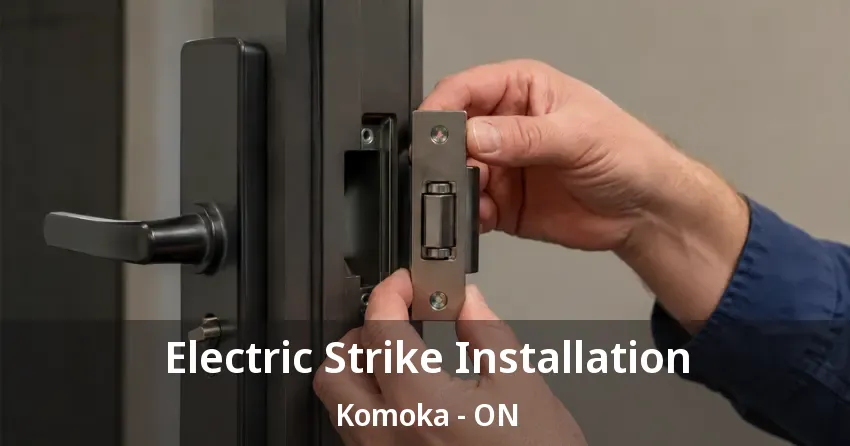
A door should release the instant an authorized credential is presented, not a beat later. Electric Strike Installation Komoka brings that instant, reliable release to doors that currently depend on keys, buzzers, or hardware that was never built for access control.
Electric strikes sit inside the door frame and replace the standard strike plate, letting a lock release electronically without changing the door's existing hardware. Electrical Services Ontario treats this as a precision installation, not a swap of one metal plate for another, because the strike has to work with the exact lockset, frame material, and power supply already in place throughout Komoka. A poorly matched strike creates a door that buzzes open unevenly, sticks under pressure, or fails exactly when someone needs it to release. Getting the fit right the first time is what separates a strike that works for years from one that needs a service call within months.
An electric strike replaces the fixed strike plate in a door frame with a spring-loaded keeper that releases the latch bolt when power is applied or removed, depending on how it is configured. The lockset or panic hardware on the door keeps functioning exactly as it always has for homeowners and businesses in Komoka. Only the frame-side component changes, which is why a strike can be added to most existing doors without replacing the handle, lever, or exit device already installed.
Two configurations exist, and the difference matters more than most property owners realize going in. A fail-secure keeper stays locked when power is lost, which keeps the space secured during an outage. A fail-safe strike unlocks when power is lost, allowing free passage. Our technicians walk through both options during Electric Strike Installation Komoka so the configuration matches how the door is actually used, not just how it looks on a spec sheet.
The right configuration depends entirely on what happens at that specific door during a power failure or fire alarm, not on a blanket preference. Fail-secure is the more common choice for exterior and perimeter doors in Komoka, since it keeps a building locked from the outside during an outage. Occupants can still exit through the mechanical hardware regardless of which configuration is installed. Fail-safe suits doors that must release automatically on fire alarm activation, or doors where free entry matters more than a locked-down default.
Doors on a fire-rated assembly have almost no flexibility here across Komoka. Fail-secure strikes are required on fire doors so the door stays positively latched if a fire event occurs, and the strike itself has to carry a listing for use on that specific fire door assembly. Our technicians confirm the fire rating of the door and frame before recommending a strike, since installing the wrong configuration on a rated opening creates a code violation that shows up during the next inspection.
Typical costs for a single-door installation range from $150 to $700 depending on the strike model, whether new wiring and a power supply need to be run, and whether the frame requires modification. A retrofit on a door with existing conduit sits toward the lower end, while a job requiring frame prep or fire alarm integration sits higher. Contact Electrical Services Ontario for a quote specific to your door and building.
A fail-secure strike stays locked when power is lost, keeping the space secured during an outage. A fail-safe strike unlocks when power is lost, allowing free passage. Fire-rated doors are almost always required to use fail-secure strikes so the door stays positively latched during a fire event, unless the door must release automatically on alarm activation.
Most doors can accept an electric strike as long as the frame material and lockset type are compatible with the strike model. Fire-rated frames without a factory strike prep are the main exception, since that prep cannot be field-cut without voiding the fire label. Electrical Services Ontario assesses the specific door and frame before recommending a solution.
A single-door installation with existing wiring or conduit typically takes 2 to 4 hours. A job requiring new wiring runs, a dedicated power supply, or frame modification can take a full day. Multi-door commercial projects are usually scoped and scheduled based on how many doors need wiring versus how many can reuse existing infrastructure.
Yes, a dedicated power supply sized correctly for the strike's voltage and current draw is required for reliable operation. Most commercial electric strikes run on 12VDC or 24VDC, and an undersized power supply is the most common reason a newly installed strike starts behaving inconsistently within the first few months.
It depends on the configuration. A fail-secure strike remains locked during an outage, while a fail-safe strike unlocks. Doors that need to stay secure during a short interruption but cannot risk a longer outage sometimes add battery backup so the strike holds its normal state until power is restored.
Fire-rated frames require a strike that carries a listing for use on that specific fire door assembly, and the frame prep must be factory-cut rather than modified on site. Fail-secure strikes on fire-rated doors also need to be wired to release on fire alarm activation, which requires coordination with the building's fire alarm system.
A properly installed and maintained electric strike typically performs reliably for 10 or more years, though high-traffic commercial doors with hundreds of daily releases wear faster than lightly used doors. Electrical Services Ontario recommends an annual check on heavy-use commercial doors to catch early signs of wear before a strike fails outright.
A proper installation starts with confirming the door and frame can physically accept the strike model being specified, since strikes are built for specific lockset types and frame profiles in Komoka. Our technicians measure the existing strike plate opening, check the frame material, and confirm the lockset's latch throw before ordering hardware. A strike sized for the wrong latch throw either fails to catch or releases unpredictably under load.
Once the correct strike is confirmed, installation involves modifying the frame prep and running low-voltage wiring from the strike to a dedicated power supply across Komoka. The strike also needs to integrate with whatever access method controls the door, whether that is a keypad, card reader, or a remote release button at a front desk. Most commercial strikes run on 12VDC or 24VDC, and confirming the voltage and current draw against the power supply avoids the intermittent failures that show up when a strike is underpowered.
A fire-rated door frame with no factory strike prep cannot simply be cut open on site to fit an electric strike for buildings throughout Komoka. Field-cutting a fire-rated frame voids the fire label and violates building code. The prep has to be specified when the frame is ordered, or the frame has to be replaced with one that already carries the correct factory cut. This is one of the most common surprises property owners run into when retrofitting older buildings with access control.
Our team checks the frame's fire rating and existing prep before any work begins, so there are no surprises partway through a job across Komoka. If the frame genuinely needs replacement to accommodate the strike, we explain that clearly up front rather than attempting a workaround that would fail inspection later.
A complete electric strike setup needs more than the strike itself. A dedicated power supply sized correctly for the strike's voltage and current draw, wiring routed cleanly through the frame and wall, and a request-to-exit sensor or door position switch where the application calls for one all play a part in Komoka installations. Skipping any single piece leaves a gap in the system, even if the strike itself is installed correctly.
Power supplies for access control applications generally need to carry a listing appropriate to the use case, and fire-rated doors add a further requirement for holding and release devices. Our technicians source power supplies rated for the specific application throughout Komoka rather than defaulting to a generic transformer, since an undersized supply is the most common reason a newly installed strike starts behaving inconsistently within the first few months.
Undersized power supplies are the single most common cause of strikes that release inconsistently across Komoka. Our technicians calculate the total current draw across every device sharing the same supply, including request-to-exit sensors and door position switches, before finalizing the model for the job. Adding devices to a supply later without checking capacity is a common shortcut that eventually causes the whole system to behave unpredictably, not just the newest addition. A supply that looks adequate on paper can still fall short once inrush current from multiple strikes releasing at once is factored in, which is why our team sizes for peak load rather than average load. This one calculation prevents most of the callback visits we see on systems installed by less careful contractors.
Battery backup keeps a fail-secure door locked correctly through a brief outage instead of defaulting to whatever state the strike lands in when power drops. This is a common addition on doors where security matters even during a short power interruption, such as server rooms, pharmacies, or any space storing valuable inventory. Our team sizes the backup battery to the expected outage duration rather than installing a generic unit that may not last through a longer interruption. A battery that is undersized for the actual load gives a false sense of security, since it can fail well before the outage itself ends. We test backup runtime against the actual connected load rather than the battery's rated capacity alone, since manufacturer ratings assume ideal conditions that rarely match a live installation.
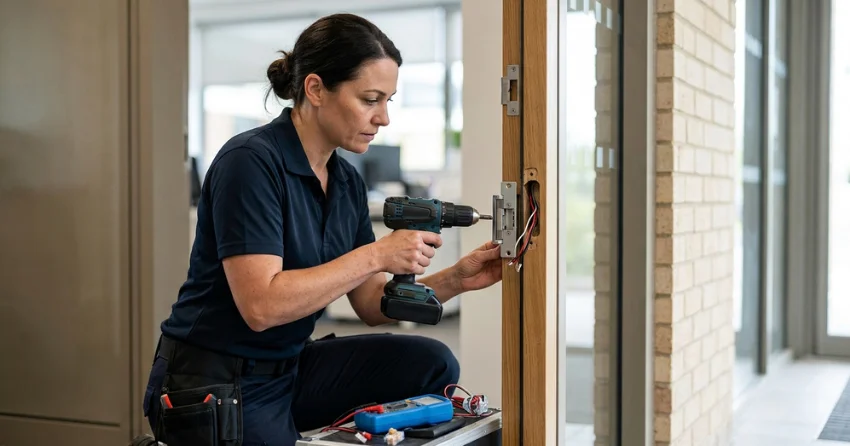
Doors with fail-secure strikes on fire-rated assemblies still need to release when a fire alarm activates across Komoka, even though they stay locked during a normal power outage. This connection runs through the building's fire alarm system, not through the access control panel alone. It requires coordination between the access control installation and the fire alarm contractor if the two systems were not designed together.
Skipping this integration is a life-safety gap that will not show up during routine daily use of the door for property owners throughout Komoka. It only becomes obvious during a fire alarm test or, worse, an actual event, which is exactly when a door needs to release without hesitation. Our technicians confirm this connection is in place and tested before considering an installation complete on any fire-rated opening.
Older commercial and residential buildings near Komoka often have door hardware that predates any access control planning, which means a retrofit has to work around existing conduit paths, wall construction, and door hardware that may no longer match current product lines. A strike model discontinued a decade ago cannot simply be replaced with an identical part, so matching an existing installation sometimes means selecting a modern equivalent instead.
Aluminum storefront doors, hollow metal commercial doors, and wood residential doors each accept electric strikes differently, and the mounting approach changes accordingly. Our team assesses the specific door and frame construction before quoting the Electric Strike Installation Komoka job, since a storefront door with a narrow stile needs a different strike profile than a standard hollow metal commercial door.
Aluminum storefront doors have narrow vertical stiles that limit how much strike body can fit into the frame, which rules out some standard commercial strikes entirely. A narrow-stile strike is purpose-built for this constraint and typically requires more careful wiring routing since there is less internal space to work with inside the frame profile. These doors also tend to flex slightly under heavy use, which means the strike keeper alignment has to allow a small margin of tolerance or the door starts sticking within the first few months. Retail entrances in Komoka are the most common storefront application our team encounters, and they usually need a strike model rated for a high daily cycle count given the volume of foot traffic passing through.
Hollow metal frames are the most common application for electric strikes and generally offer the most installation flexibility, since the frame itself has enough depth to accommodate a wider range of strike models. Existing conduit runs from a previous security system sometimes simplify the wiring portion of the job considerably. Office buildings, schools, and warehouses tend to use hollow metal doors on their side and rear entrances near Komoka, which is exactly where access control retrofits happen first. These frames also hold up well to repeated modification over the years, so a building that adds or upgrades access control in stages rarely runs into a frame that cannot support the newer hardware. Replacement parts stay available longer for hollow metal applications too, which matters when a property needs a matching strike years after the original job.
Certain situations point clearly toward an electric strike as the right access control solution for a specific door. Recognizing these signs early helps property owners plan the project accurately instead of discovering mid-quote that a different hardware type would actually fit better.
Any one of these situations is reason enough to schedule an assessment. When several apply at once, the door is almost always overdue for a proper access control upgrade rather than another round of workarounds.
Typical costs for Electric Strike Installation Komoka in the area range from $150 to $700 for a single door, depending on the strike model, whether new wiring and a power supply need to be run, and whether the frame requires modification. A straightforward retrofit on a door with existing conduit sits toward the lower end, while a job requiring frame prep, a new dedicated power supply, or fire alarm integration sits higher. Contact us via contact us or call (289) 672-2825 to get a quote specific to your door and building.
Multi-door commercial projects typically see per-door costs come down slightly once wiring runs and power supply sizing are planned across the whole job rather than door by door. Our team walks through the full scope during the assessment throughout Komoka so there are no surprise costs once work begins, and any fire-rated or code-related requirements are flagged clearly before a quote is finalized.
A technician arrives to inspect the specific door, frame, and existing lockset before recommending any hardware, since guessing at strike compatibility from a phone description leads to the wrong part being ordered on an Electric Strike Installation Komoka job. This visit typically takes 20 to 30 minutes per door and covers the frame material, fire rating status, existing wiring or conduit, and how the door is currently being accessed.
Property owners managing multiple doors on one property throughout Komoka often schedule a single assessment visit covering the full building, which lets our team plan wiring runs and power supply sizing holistically rather than treating each door as an isolated job. This approach usually produces a cleaner, more maintainable installation than tackling doors one at a time as budget allows.
A properly installed and maintained electric strike typically performs reliably for 10 or more years before mechanical wear becomes noticeable across Komoka, though the exact lifespan depends on daily use volume and how well the door and frame stay aligned. High-traffic commercial doors that see hundreds of releases per day naturally wear faster than a lightly used side entrance.
Periodic inspection of the keeper mechanism, wiring connections, and power supply output catches early signs of wear before a strike fails outright for property owners in Komoka. Electrical Services Ontario recommends an annual check on commercial doors with heavy daily use, since a strike that starts hesitating before release is usually easier and cheaper to service than one that has already failed completely. A quick check also confirms the power supply voltage has not drifted, since a slowly failing supply is often mistaken for a strike defect.
Electrical Services Ontario is fully licensed and insured, and every installation job across Komoka is backed by a satisfaction guarantee on the finished work. With 15 years of hands-on experience across residential and commercial access control projects, our technicians know which strike models suit which door and frame combinations before a single part is ordered.
We never install hardware that has not been matched correctly to the door's fire rating, lockset type, and power requirements for property managers throughout Komoka. We are upfront when a frame genuinely needs replacement rather than attempting a field modification that would not pass inspection. That thoroughness is why property managers call our team back for additional doors instead of shopping around for a new provider each time, and it is the same reason repeat customers make up a meaningful share of our access control bookings.
Every Electric Strike Installation Komoka job our technicians complete includes a full function test of the strike, the credential reader, and the fire alarm integration where applicable, not just a visual check that the door closes. That extra step is why property owners trust the finished installation to work correctly the first time it matters, not just on the day the technician leaves.
Our team scopes single-door retrofits and full multi-door building projects with the same level of detail across Komoka, since a rushed assessment is how the wrong strike model ends up ordered. Property managers dealing with an aging buzzer system, or a door that has never had proper access control, usually see the biggest improvement in the first week after installation. Staff and residents stop needing a physical key for daily entry once the new system is live. Call (289) 672-2825 to schedule an assessment for your door, or contact us and we will confirm a time that works for your building's schedule.
Every service call starts with a unique situation. Here are the common issues customers contact us about and how our team handles them.

Tell us what is happening — no power, a breaker that will not reset, or a planned upgrade. We talk it through and book a time that works for you, including same-day for urgent calls.
A licensed electrician looks at the actual panel, circuit, and load rather than quoting over the phone, then gives you a firm written price with the scope set out line by line.
The electrician who quoted the job does the work. Drop sheets go down, permits are filed where the work calls for it, and you get an update before anything changes from the plan.
Every circuit is tested before we close the panel, the inspection is booked and the certificate handed over, and our labour is warrantied for two years.
Reach out to Electrical Services Ontario for panel upgrades, rewiring, EV chargers, generators, or emergency electrical repairs across Komoka.
Call, or send a message through the form below, either way an electrician gets back to you rather than a call centre.
CALL US (289) 672-2825 EMAIL US Click to send a messageYour message stays between us.

