
Get Your Quote for Thermal Camera Installation
Fill the form below to inquire about Electrical Services Ontario's Thermal Camera Installation in Ontario.
Phone Electrical Services Ontario at (289) 672-2825 for Thermal Camera Installation in Ontario and detect in total darkness.
Fill the form below to inquire about Electrical Services Ontario's Thermal Camera Installation in Ontario.
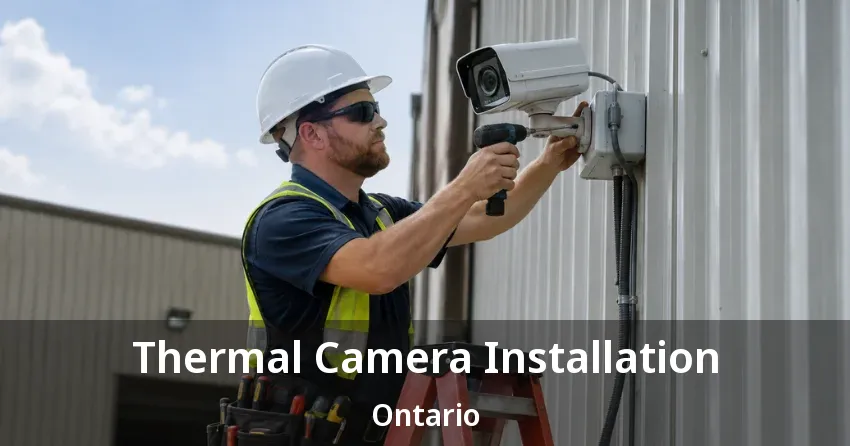
A parking lot camera that goes blind after dark leaves half your property unwatched. Thermal Camera Installation Ontario keeps every corner visible, day or night, rain or fog.
Most break-ins and perimeter breaches happen after visible light disappears, which is exactly when a standard camera stops earning its keep. Our team builds thermal coverage for Ontario around what a property actually needs to detect, not just where a camera can be mounted. For businesses in the area, that distinction changes what shows up on a recording when it matters most.
A camera system that looks complete on paper can still leave a Ontario site functionally unwatched once the sun sets, because lighting rarely reaches every corner of a commercial exterior evenly. Owners often assume more cameras means better coverage, when the real gap is a technology mismatch between what standard lenses can see and what actually happens after dark. Getting the right camera type in the right spot matters more than adding another unit to the count.
A thermal camera reads heat signatures rather than reflected light, which means it produces a usable image in total darkness, through light fog, and across distances where a standard lens would show nothing but shadow. Around Ontario, a person crossing a dark loading yard registers as a bright, clearly defined shape well before reaching a lit area or a standard camera's effective range. That detection window is the entire value: catching movement before someone reaches the building, not after they are already inside.
Properties that rely only on visible-light cameras often discover their real coverage gap only after reviewing footage from an actual incident, when the recording shows nothing but a dark smear where a person clearly walked. Thermal Camera Installation Ontario closes that gap because the sensor does not depend on streetlamps or motion-triggered floodlights to produce a usable image. It sees temperature difference, not brightness, so a body moving against a cooler background stands out regardless of the hour.
A standard IP camera needs enough reflected light to form an image, and most commercial exteriors throughout Ontario do not provide even lighting across every square foot of a perimeter. Shadows behind equipment, the far end of a fence line, and any gap between light fixtures become effective blind spots the moment the sun goes down. Heat-signature detection has no such dependency, which is why thermal units are the standard choice for perimeter and yard coverage rather than interior aisles where lighting already stays consistent.
Fog, smoke, and light rain scatter visible light in a way that degrades a standard camera's image quality significantly, sometimes to the point of uselessness. Thermal imaging passes through those same conditions with far less distortion, since heat signatures are not affected by the scattering that ruins a visible-light picture. Facilities near waterways in Ontario or in areas prone to seasonal fog get a measurable benefit from this, because those are exactly the conditions that leave standard footage unreviewable.
An assessment for Ontario starts with mapping the actual perimeter and identifying where visible-light coverage already exists versus where a true blind spot sits after dark. Not every camera on a property needs to be thermal. The strongest systems pair thermal units at perimeter and approach points with standard IP cameras covering entrances and interior spaces where identification detail matters more than raw detection range.
Technicians mount and aim each thermal unit based on the actual sightlines of the property, accounting for elevation changes, fence lines, and any structure that could create a new shadow zone once the unit goes live. Cable runs and mounting hardware get selected for the specific environment in Ontario, since a pole-mounted exterior unit faces different weather exposure than one mounted under an eave. The finished system then feeds into the same recording platform as any existing cameras, so a security team reviews everything from one interface instead of switching between systems.
Every Thermal Camera Installation Ontario project is rated by detection range in three tiers: detection, where a shape is present; recognition, distinguishing a human from a vehicle or animal; and identification, offering enough detail to tell individuals apart. A camera chosen for a 200-foot fence line needs a different lens and sensor combination than one covering a 50-foot loading area, and pricing shifts noticeably between those tiers.
Resolution on a thermal sensor works differently than on a standard camera, since the goal is heat contrast rather than fine visual detail. For sites across Ontario, a lower-resolution sensor with the right lens can still reliably flag a person at 300 feet. A higher-resolution sensor becomes necessary when a property needs to distinguish between multiple moving shapes at once, such as a busy loading dock overnight.
Perimeter-focused deployment covers a fence line or property boundary continuously, catching approach before anyone reaches a building. Point coverage instead targets a specific vulnerable spot, like a rear door or a gap between structures, with a single unit doing focused work rather than broad detection. Properties throughout Ontario choosing between the two, or blending them, base that decision on how the site is actually laid out and where past incidents or near misses have occurred.
Most commercial properties benefit from a mix of both, since a continuous perimeter line without point coverage at known weak spots still leaves the highest-risk areas under-monitored relative to their actual exposure. A property with a long fence line but only one realistic entry point may get more value from a single well-placed point camera than from spreading budget thin across Ontario on a boundary with few practical access routes to begin with.
Pairing a thermal camera with motion-based analytics can trigger a real-time alert the moment a heat signature crosses a defined line in Ontario, rather than waiting for someone to review footage the next morning. That immediacy turns a thermal system from a passive recording tool into an active deterrent, since a security team or monitoring service can respond while an intrusion is still happening rather than discovering it hours later on a recorded timeline.
This pairing matters most for properties with overnight exposure, since a real-time alert during business hours has less value when staff already notice unusual activity in person. Configuring the trip line or detection zone correctly is what separates a genuinely useful alert system from one that fires constantly on wildlife, passing vehicles, or wind-blown vegetation near Ontario, so this step gets tuned during setup rather than left on a factory default.
Properties with large open perimeters, such as distribution yards, construction sites, and equipment storage lots, see the clearest return on Thermal Camera Installation Ontario because their coverage area is large and their lighting is inconsistent by nature. A fenced yard with intermittent lighting is exactly the environment where a standard camera's blind spots multiply the fastest.
Facilities with valuable exterior equipment, fuel storage, or vehicle fleets throughout Ontario also benefit significantly, since those assets sit outside during the exact hours when standard cameras perform worst. A single overnight incident involving stolen equipment or fuel theft frequently costs more than the thermal coverage that would have caught it in progress.
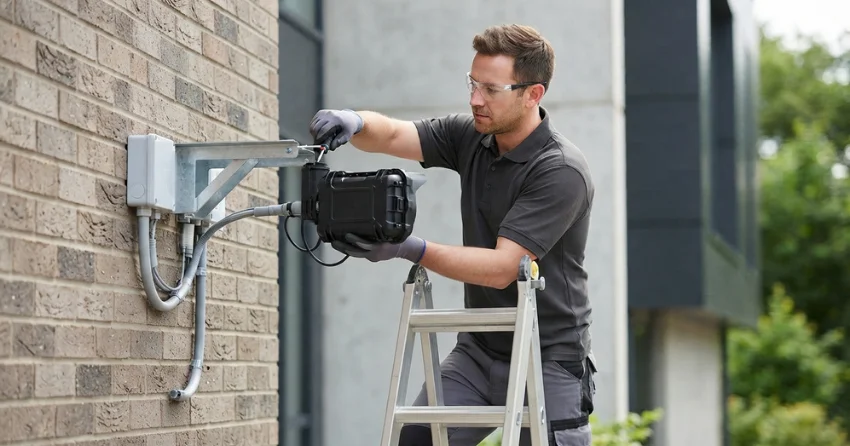
Exterior thermal units serving Ontario need housing rated for temperature swings, moisture, and, depending on mounting location, direct exposure to wind-driven precipitation. A unit rated for mild climates but installed somewhere with genuine winter conditions will show performance issues well before its expected service life ends, sometimes within the first cold season.
Mounting height and angle affect thermal accuracy more than they affect standard camera image quality, since a poorly angled unit can miss the temperature contrast between a person and the ground behind them. Technicians serving Ontario calculate mounting height against the specific detection range required for that section of perimeter, rather than defaulting to a standard pole height across the whole property.
Cable routing for outdoor thermal units in Ontario also needs its own planning, since a run exposed to years of freeze-thaw cycling degrades differently than an interior cable would. Conduit and proper sealing at every junction point keep moisture out of a connection long before it becomes a visible problem, which is the detail that separates an installation built to last from one that needs rework within a few seasons.
Thermal coverage rarely replaces an existing standard camera network entirely. It supplements the gaps that network already has. Sites with an existing IP camera setup across Ontario typically add thermal units at specific perimeter points identified during an assessment, rather than rebuilding the entire security system from the ground up.
Integration into an existing NVR or VMS platform depends on hardware compatibility, and this gets confirmed before recommending specific units, since a thermal camera that cannot feed into the existing recording platform creates a second system to manage instead of a unified one. Older analog setups in Ontario sometimes need a hybrid recorder or a small network upgrade to accept new IP-based thermal cameras, and that step gets identified during the initial walkthrough rather than as a surprise once work is already underway.
Thermal cameras typically run higher than standard IP cameras, with installed pricing for commercial-grade thermal units near Ontario commonly landing between $1,500 and $4,000 per camera depending on detection range, resolution, and mounting complexity. A short-range unit covering a single vulnerable point sits toward the lower end, while a long-range perimeter unit built for a large fenced boundary sits higher.
Full project cost also depends on how many units a property actually needs, cable runs, and whether existing network infrastructure can support the added units without upgrades. A site that only needs coverage at two or three known weak points spends far less than one requiring continuous perimeter detection around a large boundary. Call (289) 672-2825 or contact us to get a quote based on an assessment of your specific perimeter in Ontario, and expect a clear explanation of what is driving the number before any work begins.
A properly finished Thermal Camera Installation Ontario has no moving parts in most fixed units, which keeps long-term maintenance lighter than a comparable PTZ camera, but housing seals and mounting hardware still need periodic inspection. A loose mount or a degraded seal can shift a unit's field of view or let moisture in well before the sensor itself shows any sign of failure.
Sites throughout Ontario that schedule an annual check of mounting integrity and lens condition typically get 7 to 10 years of reliable service from a commercial-grade thermal unit, well beyond what a neglected system delivers. Regular firmware updates matter too, since manufacturers periodically improve detection accuracy and fix bugs that affect false-alarm rates. A unit left on outdated firmware for years can start generating more nuisance alerts than it did on day one, which is the kind of drift that erodes trust in an otherwise well-installed system.
Electrical Services Ontario is fully licensed and insured, and every Thermal Camera Installation Ontario project is backed by a satisfaction guarantee covering system performance and coverage. With 15 years of experience designing commercial security systems, our technicians know which perimeter conditions genuinely call for thermal coverage and which are better served by a standard camera at a lower cost.
We never recommend thermal units where a standard camera and better lighting would solve the same problem for less. Every recommendation comes with the reasoning behind it, not just a parts list and a total, so a client understands why a particular camera sits where it does before agreeing to it. That honesty is why property managers and business owners across Ontario return to Electrical Services Ontario for every security upgrade rather than shopping a new vendor each time a gap appears.
Every thermal camera Electrical Services Ontario installs in Ontario includes a documented coverage map showing detection range for each unit, not just a confirmation that the cameras are recording. That documentation is what lets a business actually verify its perimeter is covered rather than assuming it based on where the poles happen to be.
A site that has already had one after-dark incident rarely wants to wait for a second before addressing the gap that let it happen. Waiting through another season with the same unmonitored stretch of fence line only raises the odds that the next incident goes unrecorded too. Call (289) 672-2825 or contact us and our team will schedule a site assessment in Ontario to map coverage gaps before recommending a single camera.
Every service call starts with a unique situation. Here are the common issues customers contact us about and how our team handles them.

Tell us what is happening — no power, a breaker that will not reset, or a planned upgrade. We talk it through and book a time that works for you, including same-day for urgent calls.
A licensed electrician looks at the actual panel, circuit, and load rather than quoting over the phone, then gives you a firm written price with the scope set out line by line.
The electrician who quoted the job does the work. Drop sheets go down, permits are filed where the work calls for it, and you get an update before anything changes from the plan.
Every circuit is tested before we close the panel, the inspection is booked and the certificate handed over, and our labour is warrantied for two years.
Reach out to Electrical Services Ontario for panel upgrades, rewiring, EV chargers, generators, or emergency electrical repairs across Ontario.
Call, or send a message through the form below, either way an electrician gets back to you rather than a call centre.
CALL US (289) 672-2825 EMAIL US Click to send a messageYour message stays between us.

